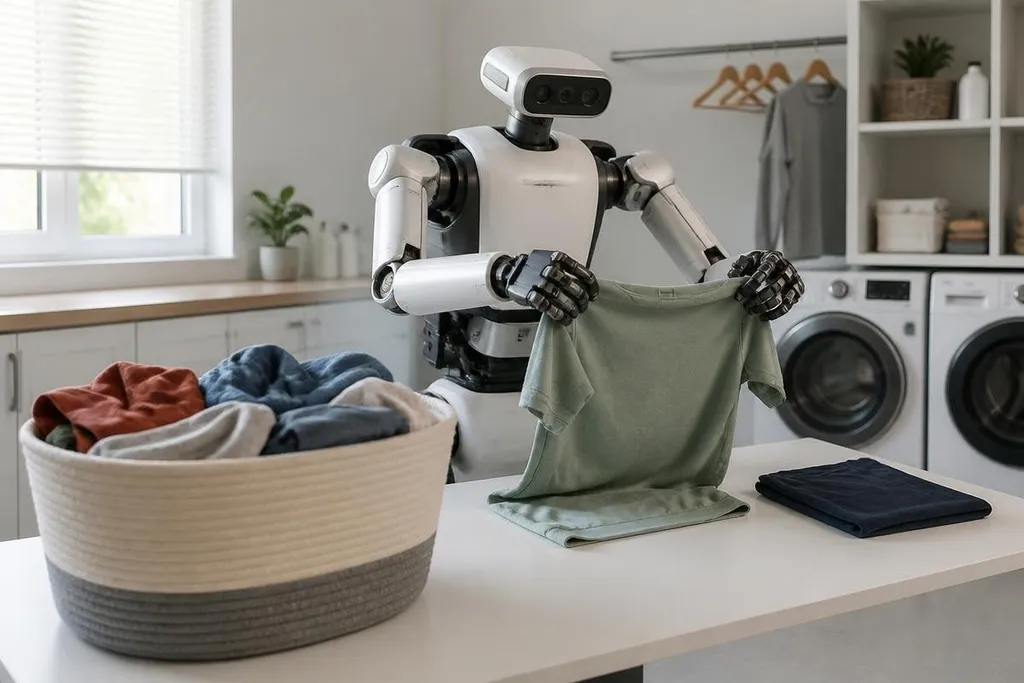
A robot can move a shirt, but folding laundry asks for much more than a moving arm. It must find the garment, understand its shape, control soft fabric, and place each fold accurately.
For a home robot, the hard work starts after the clothes leave the dryer. The machine needs to handle items that change shape every time it touches them.
Quick read
- Laundry has no fixed shape, so the robot must inspect each item before moving it.
- A useful system needs careful grip control, clear space, and a way to spot mistakes.
- Sorting and presenting clothes may arrive before fully automatic folding.
Why fabric causes trouble
A cup stays roughly the same shape when a robot picks it up. A shirt does not. Its sleeves can hide under the body, seams can twist, and two layers can stick together.
That makes folding a sensing task as much as a motion task. The robot needs cameras or other sensors to find edges, seams, corners, and loose sections before it plans the next move.
The next problem is grip. A rigid gripper can hold a box at a known point. Fabric needs enough force to stay secure, but too much force can bunch the cloth or pull one layer away from another. Small errors change the shape the robot sees.
A person fixes those errors without thinking. They shake out a shirt, flatten a sleeve, and try again when the first fold looks wrong. A robot needs a way to detect each mistake and recover from it.
Folding is a chain of small tasks
The laundry system would need to complete several linked actions. It must separate one item from a pile, identify the item, spread it on a surface, find useful fold lines, move the fabric, and check the result.
Each action affects the next one. A shirt placed at an angle creates a poor starting point. A sleeve left under the body changes the second fold. A towel with a corner hidden under another item may need a different grip.
This is why a clean demonstration can hide the real work. A staged room may give the robot one garment, a clear table, and a known starting position.
A home laundry pile gives it mixed sizes, damp patches, tangled items, and objects that should stay separate.
A laundry-folding demo can hide the hard parts, such as sorting damp clothes or fixing a fold that slips. Robot24.com can put those claims beside the named robot, test setting, and times a person had to step in. Those details lead to the practical question ahead: what would a useful home robot need?
What a useful home robot would need
A home machine does not need human-level skill to save time. It could handle a narrow part of the job, such as spreading towels or sorting clothes by type, if the room and items stayed within known limits.
Full folding needs more. The robot must work across different fabrics, sizes, colors, and levels of disorder. It also needs safe contact with hands, pets, furniture, and clothing that may contain buttons, cords, or small objects.
Speed matters too. A robot that folds one shirt slowly may be useful for research, but it will feel less useful at home if a person can finish the same pile during the setup time. The system also needs a clear response when it cannot identify an item.
The machine should stop and ask for help rather than hide a bad fold in the stack. That behavior matters more than a short video showing one successful shirt.
A practical buying check
If a laundry robot reaches your market, check these points before paying for it:
- Task range: Ask which garments it handles, and which ones need human help.
- Starting conditions: Check if clothes must lie flat, face upward, or arrive one item at a time.
- Recovery: Look for footage showing tangled fabric, missed edges, and a failed fold.
- Speed: Compare the full cycle, including sorting and setup, with your usual laundry time.
- Safety: Check how the robot stops when a hand, pet, or loose object enters its work area.
- Service: Ask who fixes the gripper, sensors, and software when fabric handling gets worse.
The strongest early use may be a robot that sorts, spreads, or stacks clothes under controlled conditions. Folding a mixed home laundry pile remains a harder test because every garment changes the problem.
I'd wait for a system that shows long, uncut runs across several garment types before buying one for home use. Until then, a robot may handle a narrow laundry step, but the full basket still needs a person nearby.